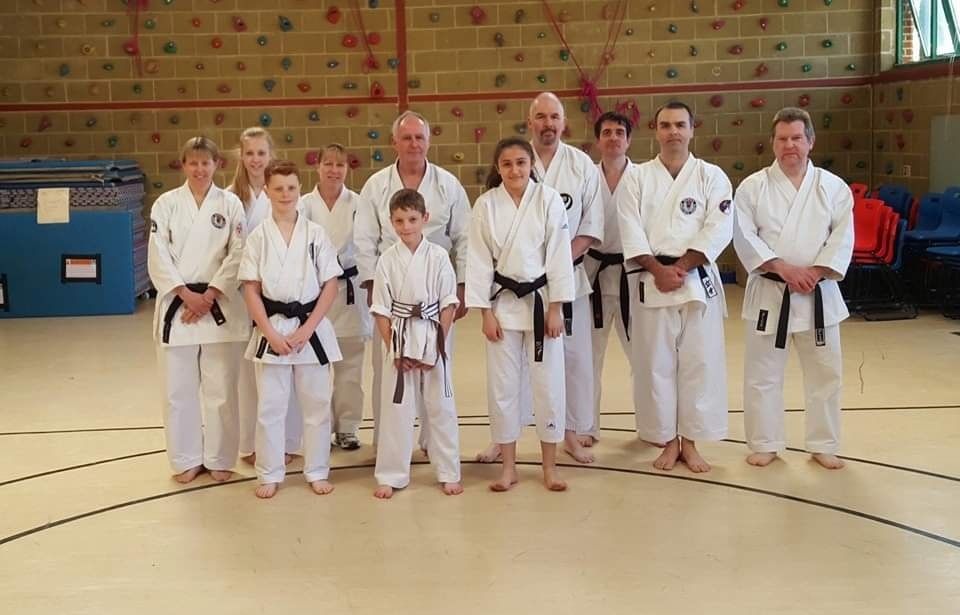
In traditional Japanese martial arts, etiquette and mindset are not separate from physical technique. They are the foundation that gives technique meaning. Without them, training becomes exercise rather than true martial discipline.

The three maxims you have highlighted describe a dojo culture where character, focus and respect are placed above style switching, casual attitudes or convenience. They shape how a student thinks, behaves and ultimately develops.

Shingi O Omanji Loyalty to the Instructor

Shingi O Omanji is often translated as a student must have loyalty to his instructor. At first glance this can sound strict, but in traditional martial arts it is really about trust, continuity and depth of learning.

In Japanese systems the relationship between teacher and student is not treated as a quick exchange of techniques. It is closer to an apprenticeship. The instructor is not just teaching movements. They are passing on timing, distance, combative awareness, etiquette and the deeper spirit of the art.

If a student keeps changing instructors or styles, the issue is not only confusion in technique. It is that nothing is ever taken deep enough to be fully absorbed. Each school has its own way of moving, its own principles and its own way of thinking about combat. Constant switching can leave a student with surface level knowledge rather than real understanding.

Loyalty here does not mean blind obedience. It means commitment long enough to actually learn what is being taught before judging it or moving on. It is about giving the process time to work.

Jojitsu Ni Oberezu Teacher and Student Are Not the Same

Jojitsu Ni Oberezu translates as teachers and students are not all one.

This principle is about boundaries and respect. In everyday life people mix roles and friendships freely. In the dojo the structure is different. The instructor leads and the student follows. That structure is what allows learning to happen clearly and safely.

Outside the dojo it is fine to be friendly with your sensei. Inside training that friendship should never be used to blur respect or weaken discipline. Familiarity can easily lead to lowered standards, less correction and a more relaxed attitude that damages progress.

The deeper meaning is about ego control. The dojo is designed to put the student in a position where they are not equal to the teacher in skill or knowledge. That difference is not personal. It is functional. It creates the conditions for growth.

It also prevents students from using personal relationships to avoid correction or bend the rules. The training environment only works when the structure is protected.

Shinkenmi Ni Tesseyo Be Serious in Your Efforts

Shinkenmi Ni Tesseyo means to train with complete seriousness and sincerity.

This maxim is very direct. No casual behaviour, no unnecessary talking, no smoking, eating or drinking in the dojo. The space is for training only. Every action should support focus and development.

In martial arts, attention is everything. When focus drops, technique weakens and safety is reduced. Serious training protects both the student and their partner.

But this is not just about rules. It is about mindset. The goal is to train the mind to stay present and committed under pressure. That level of focus is what eventually carries over into real situations where hesitation or distraction can be costly.

The dojo is not meant to be a social space. It is a place where the mind is trained to switch fully into discipline the moment you step on the floor.

The Dojo as a Way of Life

These three principles work together to shape more than technique. They shape character.

Loyalty builds depth. Boundaries build respect. Seriousness builds mastery.

Without loyalty training becomes scattered. Without structure respect breaks down. Without seriousness progress stays shallow.

Traditional martial arts use these rules not to restrict people but to remove distractions so real development can happen. The aim is not only to build skill but to build a mindset that can hold under pressure in and out of the dojo.

#WadoRyuKarate #KarateTraining #MartialArts #mushin #SelfDefense #MartialArtsPhysics #KarateTechnique #Taisabaki #KarateFundamentals #zanshin #noru #nagashi #zen #karate #hikite

Search this site

Unleash Your Full Martial Arts Potential Sign up to our Newsletter

10 + 7 =

"White belts are the foundation of any martial arts club, breathing life and enthusiasm into its existence."

David oakley

"Martial arts training is a journey that not only strengthens the body but also empowers the mind, teaching discipline, focus, and resilience."

David Oakley

"A modern warrior with a samurai spirit is guided by honor, integrity, and a relentless pursuit of excellence in every aspect of life."

Tyler Sirhan

Traditional Martial Arts World Online

World of Martial Arts

All rights reserved Traditional Martial Arts World 2023