
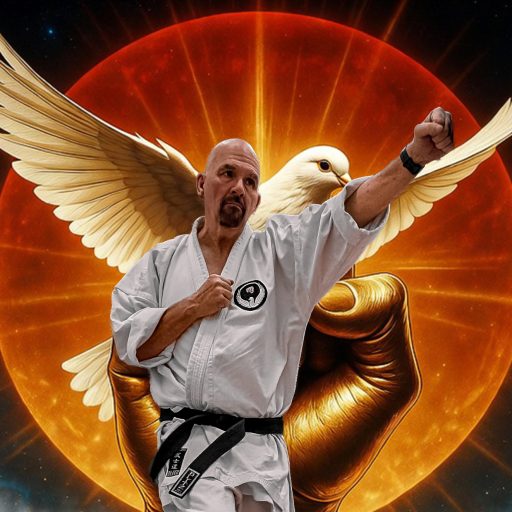
The Hidden History of Wado Ryu Karate From Japanese Jujutsu to Okinawa and Ancient China
Most karate practitioners know that Wado Ryu was founded by Hironori Otsuka, but far fewer understand just how unique its origins really are. Unlike many karate styles that developed solely from Okinawan traditions, Wado Ryu is a fascinating blend of Japanese jujutsu, Okinawan karate and martial concepts that can be traced back to mainland China.
Understanding these roots helps explain why Wado Ryu feels different from other forms of karate. It is not simply a striking art. It is a sophisticated system built around body movement, timing, evasion and controlling an opponent's balance.
The Foundation of Wado Ryu Was Shindo Yoshin Ryu Jujutsu
Hironori Otsuka was born in 1892 and began studying Shindo Yoshin Ryu Jujutsu at the age of six under his father. He later trained under the respected master Tatsusaburo Nakayama and eventually received a licence of full transmission in the art.
Shindo Yoshin Ryu was developed during Japan's feudal period and specialised in techniques designed for close quarter encounters. Its methods included throws, joint locks, body shifting, evasive movement and the ability to blend with an attack rather than meet force with force.
Many of the principles that Wado Ryu practitioners recognise today come directly from this tradition. Concepts such as nagasu, flowing away from an attack, inasu, redirecting force, and noru, riding an opponent's movement, have clear links to classical Japanese jujutsu.
These principles explain why Wado Ryu emphasises tai sabaki or body management instead of relying on hard blocks and powerful collisions.
Okinawan Karate Arrives in Japan
In 1922 Otsuka attended a demonstration given by Gichin Funakoshi, who had travelled from Okinawa to introduce karate to mainland Japan.
Otsuka was impressed and became one of Funakoshi's earliest students. He trained diligently and quickly rose through the ranks, helping to teach classes and assist with developing karate in Japan.
However, Otsuka believed that karate techniques could be improved by integrating the sophisticated body movement and grappling skills of Shindo Yoshin Ryu Jujutsu. He felt that simply meeting force with force was inefficient and contrary to the principles he had spent his life studying.
By the late 1920s Otsuka had begun modifying karate techniques, introducing smoother evasions, off balancing methods and paired exercises that reflected his jujutsu background.
In 1934 he formally established Wado Ryu, which translates as "The Way of Harmony."
Okinawa and Its Chinese Connection
To understand Wado Ryu fully we must travel further back in history to Okinawa.
For centuries the Ryukyu Kingdom maintained close trade and diplomatic relations with China. Chinese merchants, scholars and martial artists frequently visited Okinawa and shared elements of their culture with the local population.
Okinawan fighting traditions known as Te gradually absorbed Chinese boxing methods, eventually evolving into what became known as Karate.
Many kata practised in Wado Ryu today originated in Okinawa and retain strong Chinese influences. Kushanku, Chinto, Naihanchi and Seishan all have connections to Chinese martial traditions.
Did Wado Ryu Ultimately Descend From Wing Chun?
No one can say with certainty which Chinese systems influenced Okinawan karate because many records have been lost.
However, some researchers believe that the roots of several Okinawan styles may lie in Southern Chinese arts, particularly systems practised in Fujian Province.
Wing Chun is often mentioned because it shares several characteristics with Wado Ryu.
Both arts favour an upright posture and economy of movement. Neither relies on excessive muscular tension. Both use angular stepping, simultaneous attack and defence, centreline control and sensitivity to an opponent's balance.
Wado Ryu's preference for entering at an angle, avoiding collisions and striking while moving bears a striking resemblance to concepts found in Wing Chun.
Yet there are important differences. Wado Ryu also contains circular movement, throwing techniques and classical Japanese principles inherited from Shindo Yoshin Ryu that are absent in Wing Chun.
It may be more accurate to say that both systems inherited common ideas from older Southern Chinese boxing traditions rather than suggesting that Wing Chun itself directly evolved into Wado Ryu.
A Unique Martial Synthesis
Wado Ryu remains one of the most sophisticated karate systems ever developed because it successfully united three distinct martial cultures.
From China came principles of efficient striking and flowing movement.
From Okinawa came the kata and practical fighting methods that shaped early karate.
From Japan came the refined body mechanics, throws and evasive skills of Shindo Yoshin Ryu Jujutsu.
The result was not simply another style of karate but a complete martial art that rewards intelligence, timing and adaptability over brute strength.
Perhaps this explains why Hironori Otsuka often reminded his students that martial arts should not be about clashing with force. The true essence of Wado Ryu lies in finding harmony within conflict and learning to move in such a way that an opponent's power becomes their own weakness.
#WadoRyu #WadoRyuKarate #KarateHistory #JapaneseJujutsu
#ShindoYoshinRyu
#OkinawanKarate #ChineseMartialArts
#WingChun #HironoriOtsuka
#TraditionalKarate #MartialArtsHistory
#KarateOrigins #RyukyuKingdom
#SouthernChineseKungFu #TaiSabaki
Search this site
Unleash Your Full Martial Arts Potential Sign up to our Newsletter
Traditional Martial Arts World Online
World of Martial Arts
All rights reserved Traditional Martial Arts World 2023