
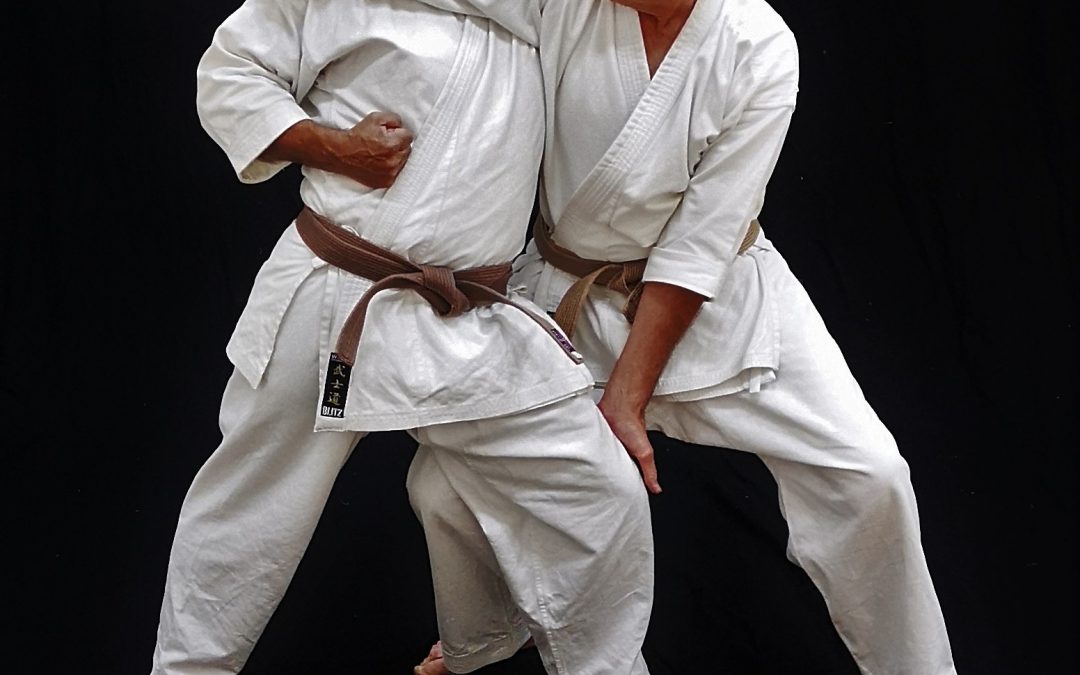
What Is the Goal of Karate?
Karate aims to develop a person both physically and mentally while providing practical skills for personal protection. It teaches effective striking with all parts of the body, hands, feet, elbows, and knees, while shaping attributes such as strength, flexibility, focus, discipline, confidence, and emotional control.
Beyond its self defence value, karate functions as a path of self-development (budō), a method for managing stress, and a way to improve overall lifestyle habits through structured training and heightened awareness.
Key Goals & Benefits
Self-Defence
Karate equips practitioners with practical tools for managing real world threats, strikes, blocks, movement, distance control, and the ability to deliver quick, decisive techniques when necessary.
Physical Conditioning
Training strengthens the entire body, improving power, mobility, coordination, reaction time, balance, and cardiovascular endurance.
Mental Focus & Discipline
Through repeated practice, such as kata and structured drills, students learn concentration, patience, self control, and the ability to stay calm under pressure.
Confidence & Self-Belief
Progressing through skills and challenges naturally builds confidence and awareness, helping practitioners feel more capable and secure in themselves.
Stress Relief
Karate offers both an intense physical outlet and a meditative rhythm that clears the mind and reduces tension.
Character Development (Budō)
Respect, humility, perseverance, leadership, and resilience are woven into training, encouraging growth far beyond physical technique.
Sport & Competition
Karate can also be practised as a sport, with events for sparring (kumite) and forms (kata), each with defined rules and scoring.
How Karate Works
Striking
Students learn to generate power using various striking surfaces, fists, elbows, kicks, knees, using linear or circular mechanics depending on the style.
Kata (Forms)
Detailed solo sequences that build precision, timing, memory, and technical mastery.
Kumite (Sparring)
Partner training where students apply techniques in real time, sharpening timing, footwork, distance judgement, and emotional control.
The goal of karate is to strengthen the body, sharpen the mind, and cultivate character through disciplined practice. It prepares individuals to protect themselves, handle stress, grow in confidence, and pursue personal excellence both inside and outside the dojo.
How Karate Improves Character
1 Discipline Through Routine
Karate requires regular practice, repetition of techniques, and adherence to rules.
Over time, this builds self-discipline, punctuality, and commitment, traits that carry over into school, work, and everyday life.
2 Respect for Others
Karate begins and ends with rei (bowing), a symbol of respect.
Students learn to treat instructors, training partners, and even opponents with courtesy, reinforcing humility and good manners.
3 Self-Control
Training teaches students to manage their emotions, especially during sparring where staying calm is essential.
This strengthens emotional regulation, reducing impulsive behaviour and helping people think clearly under pressure.
4 Perseverance and Resilience
Progress can be challenging; mastering techniques takes time and effort.
Working toward belts and skills teaches students to push through frustration, handle setbacks, and persist, core traits of resilient people.
5 Confidence Without Ego
Karate builds confidence through skill development, but students are taught to pair confidence with humility.
This prevents arrogance and encourages quiet, steady self-belief.
6 Responsibility and Accountability
Students learn to take responsibility for their training, behaviour, and progress.
They discover that improvement comes from their own effort, developing accountability and a strong work ethic.
7 Awareness and Mindfulness
Karate requires students to stay aware of their surroundings, their breath, and their movement.
This trains mindfulness, helping them stay present, focused, and in control in daily life.
8 Leadership Development
As students progress, they often help beginners or demonstrate techniques.
This builds leadership skills, patience, communication, and the ability to set a positive example.
Karate strengthens character by shaping discipline, respect, humility, confidence, and resilience. It challenges the body, but it transforms the mind, and that’s one of its most valuable benefits.
by David Oakley
#WadoRyuKarate #KarateTraining #MartialArts #BodyMechanics #SelfDefense #MartialArtsPhysics #KarateTechnique #Taisabaki #KarateFundamentals #ForceAndPower #noru #nagashi #self-defence #karate
Search this site
Unleash Your Full Martial Arts Potential Sign up to our Newsletter
Traditional Martial Arts World Online
World of Martial Arts
All rights reserved Traditional Martial Arts World 2023